Hormones and ADHD: Why Women Experience Symptoms Differently
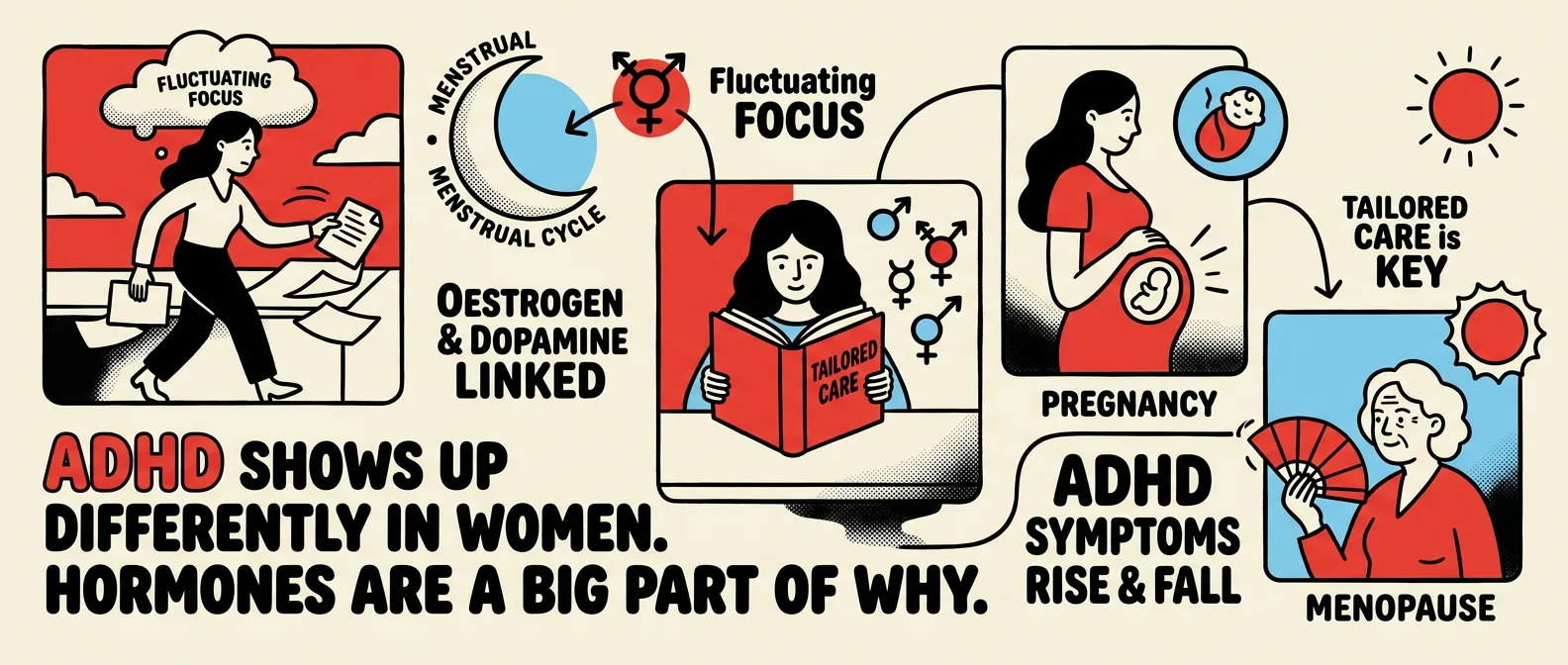
ADHD research was built on boys. Most of what clinicians were taught came from studying hyperactive eight-year-old boys, so a lot of what shows up in women got missed for decades. One of the biggest reasons women experience it differently comes down to hormones, specifically oestrogen's relationship with dopamine, the brain chemical behind focus, motivation and mood. When oestrogen rises and falls, dopamine tends to follow it. For women with ADHD, that means symptoms can shift week to week and across a lifetime.
Oestrogen and focus
In the days before a period, oestrogen drops sharply, and a lot of women notice their concentration slipping, their emotions running hotter, their fuse shortening. Lower oestrogen means lower dopamine, and the brain regions handling planning and self-control stop working as smoothly.
It's also why PMDD, a severe form of premenstrual syndrome, shows up more often in women with ADHD than in women without it. The mood swings and mental fog that come with hormone changes seem to hit harder when ADHD is already there.
Two ways hormones leave their mark
Hormones shape the brain in two different ways. Some effects are permanent, laid down during key developmental windows and wired in for years. Others are temporary, present only while the hormone is, like the shifts around ovulation.
Early puberty seems to tip things toward the permanent kind, which may leave some girls more impulsive and more prone to low mood later in life.
Puberty
For teenage girls with ADHD, this stage carries real risk. Studies point to higher rates of depression, self-harm, risky sexual behaviour and binge drinking. Catching ADHD early matters, because support during these years can change where someone ends up.
Pregnancy and the months after
There's surprisingly little research on this period, which is itself telling. During pregnancy, oestrogen and progesterone run high, and some women find their symptoms actually ease.
The harder stretch usually comes after birth. Hormone levels crash, sleep falls apart, and the mental load of a newborn piles on top. Symptoms often flare, and the risk of postpartum depression climbs too. If you're struggling in those first months, you're not failing at this.
Perimenopause and menopause
Many women call this the hardest stretch. Oestrogen declines for good, dopamine drops with it, and menopause happens to share a long list of symptoms with ADHD: trouble focusing, fatigue, forgetfulness, anxiety, mood swings, poor sleep, changes in libido.
If you already have ADHD, it can feel like getting hit twice by the same thing. Some women find old symptoms getting louder; others notice new ones for the first time. It's frustrating, but it responds to treatment.
Getting the right support
ADHD in women needs care built around the whole picture, not a standard protocol. In practice, that means factoring in where someone is hormonally, adjusting medication around the cycle where needed, and checking for conditions that often ride alongside ADHD, like PMDD or postpartum depression.
If your symptoms rise and fall with your cycle, or shifted when you moved into a new life stage, it's worth raising with a clinician who understands the connection.
Speak to Dr Sharma
If any of this sounds familiar, you don't have to work through it alone. Dr Sharma runs a dedicated ADHD clinic focused on how the condition plays out across a woman's life, from puberty through pregnancy to perimenopause and beyond. She's currently taking new patients and offers consultations to talk through your symptoms, look at where hormones might be playing a part, and build a treatment approach around you. Get in touch with the clinic to book an appointment or ask a question.